
Weddings are exciting, personal and deeply emotional. However, to plan one yourself can be overwhelming. With destination weddings, it can feel like you have more things to coordinate. Just thinking about booking tickets, securing hotel blocks, and coordinating schedules can make anyone dizzy.
It’s natural, but sure enough, you can do it just like many other people have successfully done it before you. The key is to organize everything early. This saves headaches, gives you time to handle surprises, and ensures your friends and family have a wonderful experience during this deeply meaningful milestone. If you want to plan a destination wedding, here’s how to make it easier and more enjoyable for your guests.

*Disclosure: This post may contain affiliate links, which means we may receive a commission if you click a link and purchase something that we have recommended. Please check out our disclosure policy for more details. Thank you for your support!
Tips for Coordinating Travel for a Destination Wedding
1. Start With a Clear Travel Timeline
Guests love knowing what’s coming up. There are usually two types of invitations you need to send to make sure everyone is on the same page — save-the-date cards, which announce your wedding and the date, and formal invitations, which provide more detailed information.
For traditional weddings, save-the-dates are typically sent four to six months in advance. However, since you’re planning a destination wedding, your loved ones may need a longer window to request time off and budget realistically. Eight to 10 months is a more generous timeline, and longer is even better. Be sure to include the resort, city or country you’re marrying in, and general travel information.
Formal invitations should go out six to eight weeks before the big day. This is when you can add more detailed instructions on how to get there, local transportation options and a list of hotels.
2. Arrange Flights and Accommodation Early
Travel websites often have timelines showing when flights are cheapest. For domestic travel, booking one to three months in advance can save around 25% compared to last-minute fares. For international trips, it may be cheaper to book 18 to 29 days before departure, but it’s much better to secure tickets months ahead to guarantee availability.

Some airlines give discounts when you book for a group. The trick is to know the cost of individual tickets first, so the group rate makes financial sense. Hotels often offer room blocks for weddings at pre-negotiated rates. This gives guests discounted rooms and keeps them close together. Try to arrange these six to twelve months in advance to secure the best options.
Some people also like having different price options. Budget-conscious friends might choose Airbnbs or midrange lodging nearby. Couples traveling with elderly family members often prefer hotels closer to the ceremony site. All-inclusive resorts sometimes offer bundles that include meals, drinks and transportation, making planning easier and keeping costs lower for everyone.
3. Organize Guest Transportation by Group
Your immediate family might not travel the same way as your distant guests. Since destination weddings tend to be smaller, intimate gatherings of around 48 attendees, it’s easier to organize travel for different groups based on their needs.
For example, parents often appreciate more comfort, so you could help them book direct flights or VIP transfers. Your bridal party, on the other hand, should coordinate their flights to arrive together in time for rehearsals.

If you’re expecting a large group, consider private transfers from the airport. Vans or shuttles ensure no one gets lost. You can also assign volunteers or a wedding coordinator to greet guests upon arrival. Little touches like this prevent confusion and help travelers feel cared for from the moment they land.
Don’t forget about transportation between venues during the wedding weekend. Arranging shuttles from the main guest hotels to the ceremony and reception sites is a thoughtful touch that prevents anyone from worrying about driving after celebrating.
For smaller groups or VIPs, you might organize private car services. Including this information on your wedding website and in a welcome note will put your guests at ease.
4. Prepare Travel Documentation Guides
Traveling for a destination wedding usually means passports, visas and sometimes proof of vaccination. It helps to put together a simple checklist for your invitees. Remind them to check passport validity. Some countries require that a passport be valid for at least six months after the trip.

Travel insurance is also a smart idea. Flights get delayed, luggage gets lost and plans can change more often than you expect. Encourage guests to use travel folders or apps to keep digital copies of tickets, confirmations and IDs. Add tips on how to get around, local customs, and safety. Guests who arrive prepared feel more relaxed and ready to enjoy the celebration.
5. Include Buffer Days for Arrival and Departure
Flights can come with unexpected issues. Some attendees may experience delays, long layovers or jet lag, which can throw off your itinerary. Ideally, you should arrange for guests to arrive one day before your first wedding-related event. This gives them time to rest or even explore and accounts for potential delays.
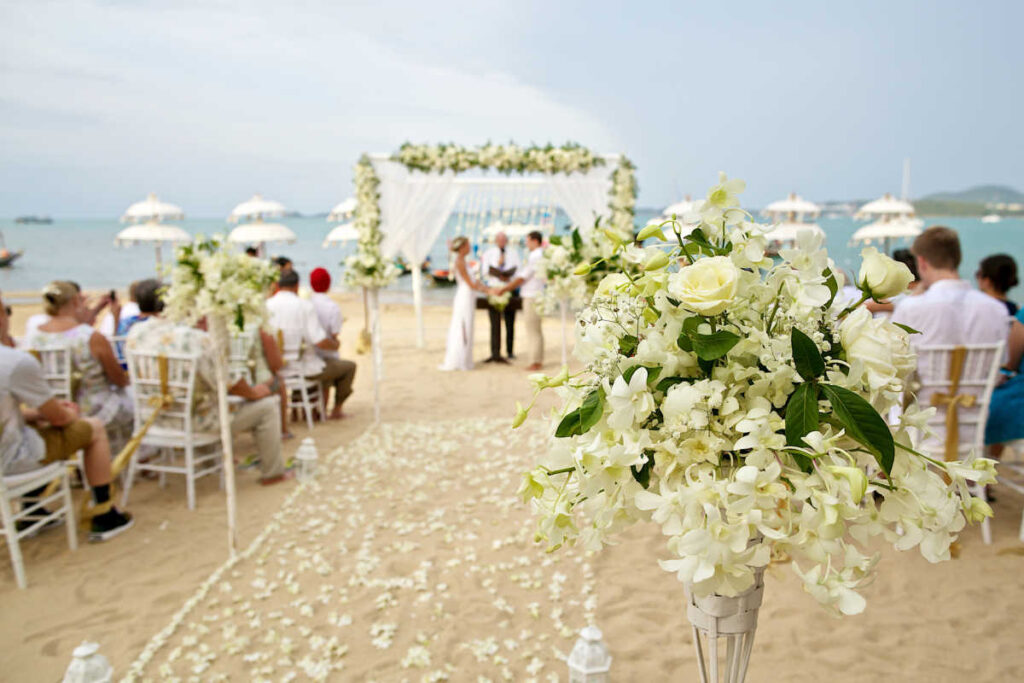
It’s also a good idea to plan a day or more after the wedding for departures. Some loved ones like to turn the trip into a vacation, and it’s the perfect excuse since everyone’s already together. These buffer days give families the flexibility to enjoy the destination without feeling rushed.
6. Welcome Guests With a Gratitude Gift
Nothing says thank you for coming better than a gift that shows you appreciate that your guests crossed land, seas, and oceans to celebrate with you. You can include a heartfelt note with their names, along with a list of emergency contacts, such as the local hospital or transportation providers.

It’s also nice to add local tips, like hidden gems most tourists miss, locals’ favorite spots or places to eat that give them a taste of the destination. Even a few practical items, like sunscreen or pain relievers, can go a long way, especially if you’re having a beach wedding or celebrating somewhere with warmer weather.
7. Prepare for the Unexpected
Even when you’ve meticulously mapped each day and hour, life happens. Unforeseen disruptions can throw months of planning off the table. That’s why guests should be encouraged to book refundable flights if possible. You should also keep extra hotel rooms available, just to be on the safe side.
Always have a communication plan ready. You can use text messages or email to keep everyone updated if anything changes. Destination weddings abroad often mean some people won’t have access to Wi-Fi or data, so prepare for that too.
Make the Journey as Special as the Celebration
Planning well in advance gives you and your guests the chance to enjoy the trip rather than worry about the details. When the journey feels easy, people show up excited, present, and ready to celebrate with you. That shared experience of arriving together, exploring a new place and being part of your story often becomes just as meaningful as the wedding itself.
About the author: Cora Gold is the Editor-in-Chief of women’s lifestyle magazine Revivalist. She has a passion for adventure and living life to the fullest, especially with her family by her side.